
Painters in a boom-lift cradle applying the first protective coat to the blasted hull. Shipyard progress documentation in Singapore.

Maritime Photography Singapore, Old Vessels to New Builds

The maritime photography and videography document the refurbishing journey of JP88 Stork. Specifically, the transformation from an old worn-out utility fast craft to a beaming new vessel.

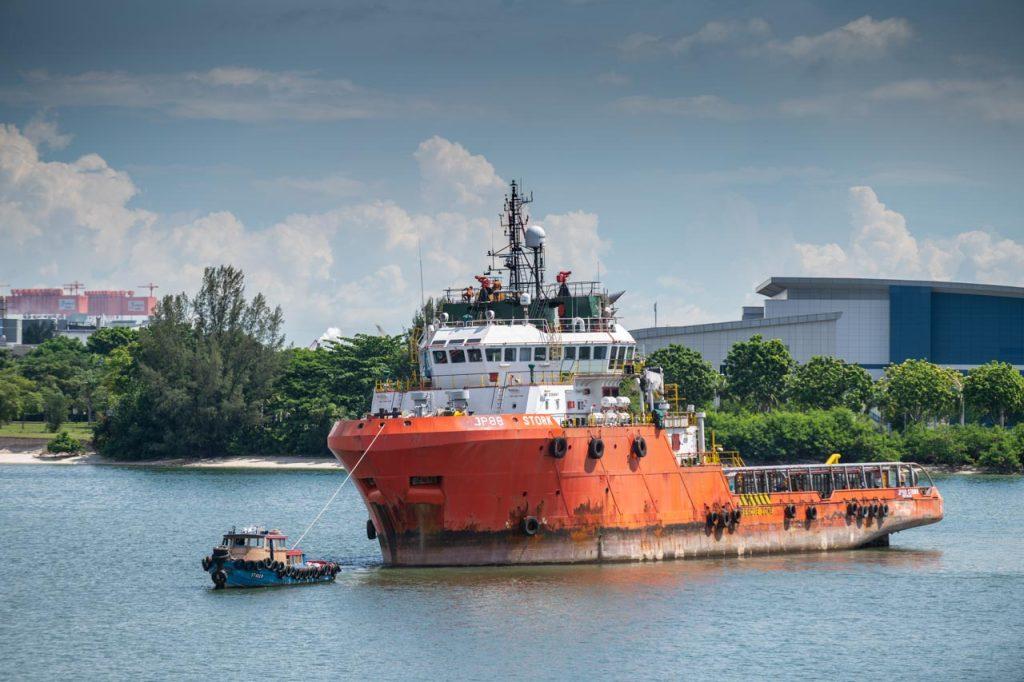
The JP88 Stork in her worn orange livery with a harbour tug alongside, bound for the submersible dock. Vessel refurbishment photography in Singapore.
Marine vessel guided by a tug boat ready to enter the submersible dock.
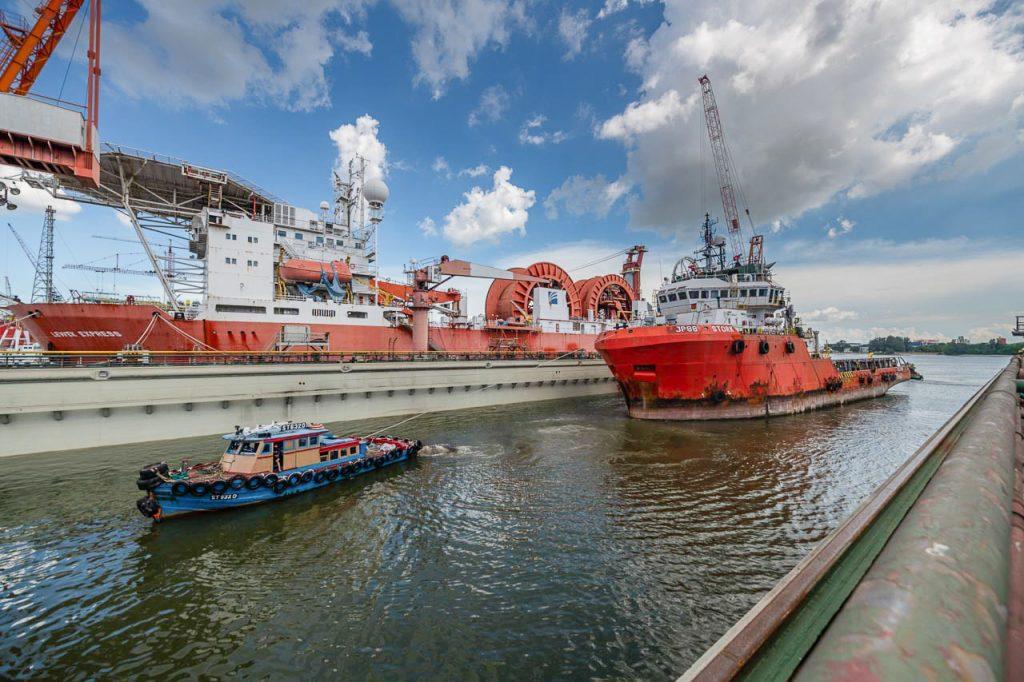
The JP88 Stork approaching the submersible dock as a workboat passes in the foreground. Shipyard progress documentation in Singapore.
Marine vessel entering the submersible dock
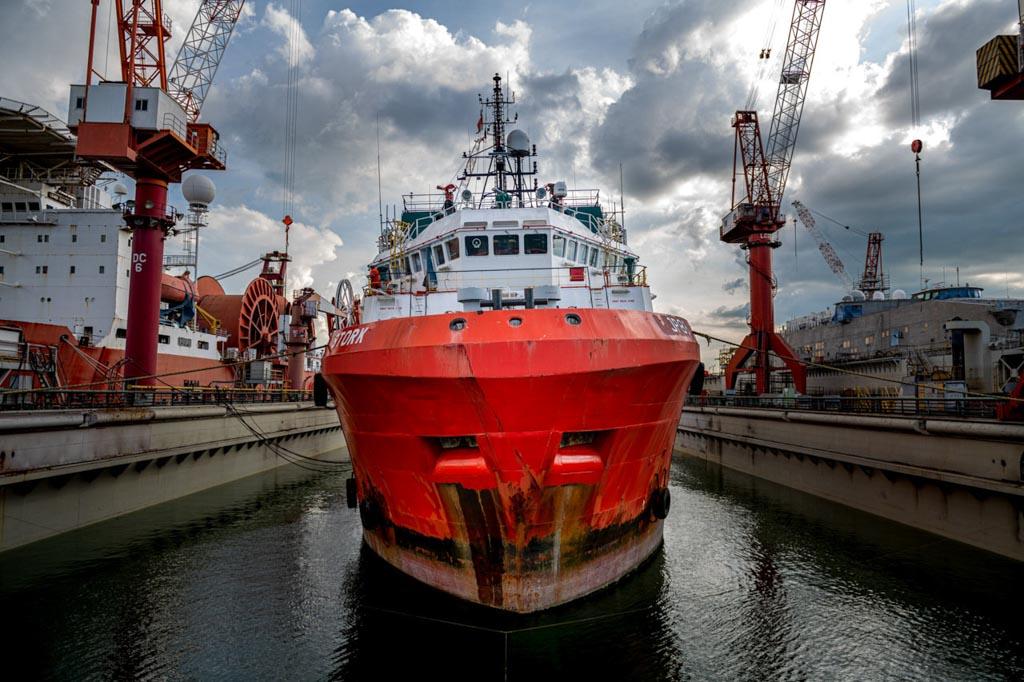
The JP88 Stork bow-on in the flooded submersible dock before refurbishment. Industrial process documentation in Singapore.
Maritime photography such as these helps to promote the services of a shipyard. It gives vessel owners a clearer view of the services provided as well as the scale of the work. This helps tremendously in bridging the understanding between the shipyard and its clients, This image shows a maritime utility vessel towed into the submersible dock in the service shipyard. With the protective paint at the bottom gone, she is thus in need of some servicing. Strategic Marine placed the JP88 Stork at Keppel Shipyard for this refurbishment.
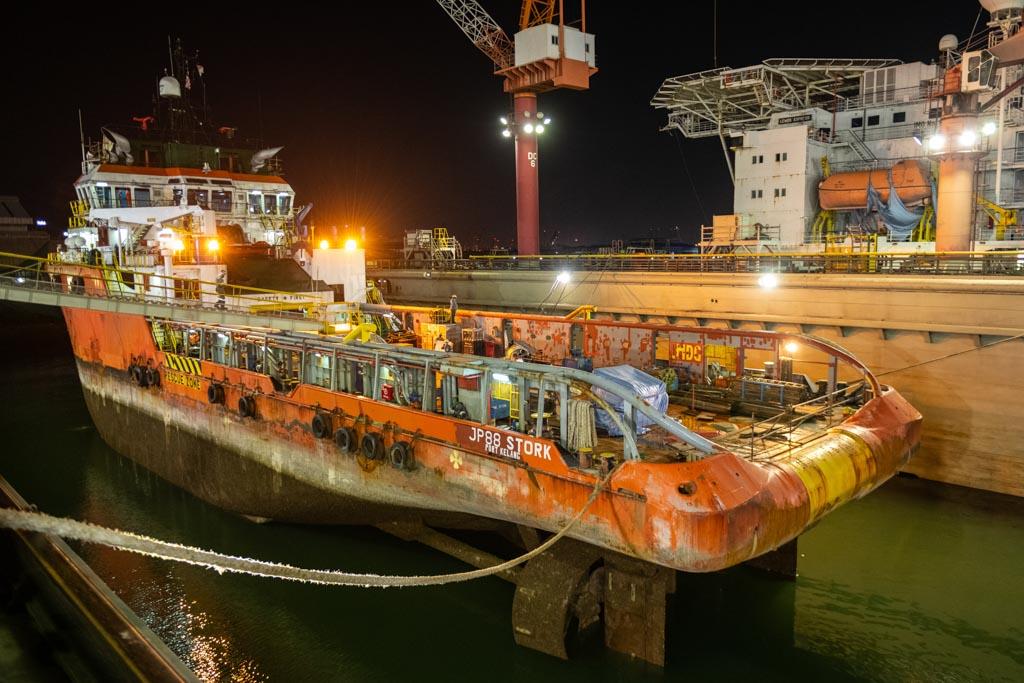
The JP88 Stork on the submersible dock at night, her worn hull emerging under floodlights as the water drains. Shipyard progress documentation.
The water in the dock got shallower as the dock slowly rise above the water level. The docking and draining process will take about 8 to 12 hours.

Ship refurbishing in progress
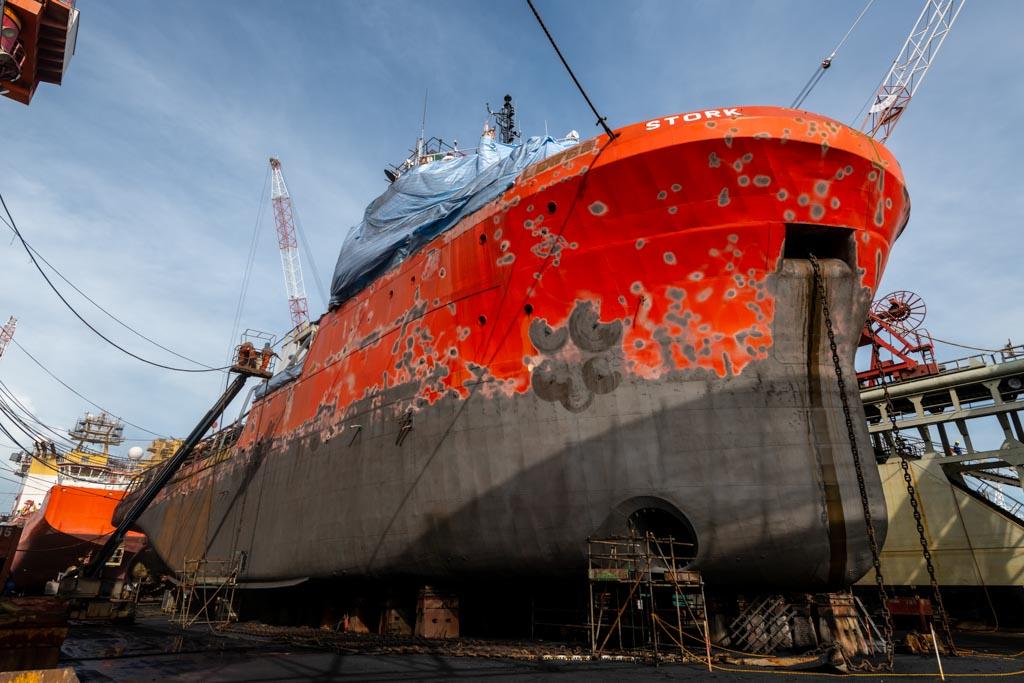
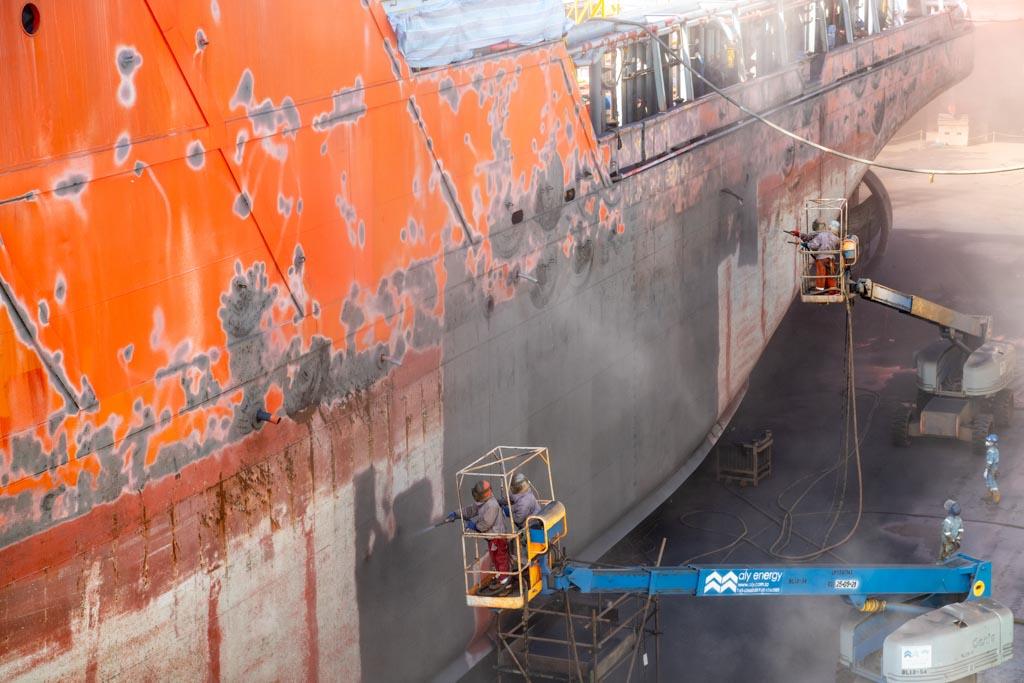
A worker on a boom lift preparing the hull surface as the old paint comes off in patches. Industrial process documentation, JP88 Stork.
Professional Maritime and industrial Images by Tuckys Photography
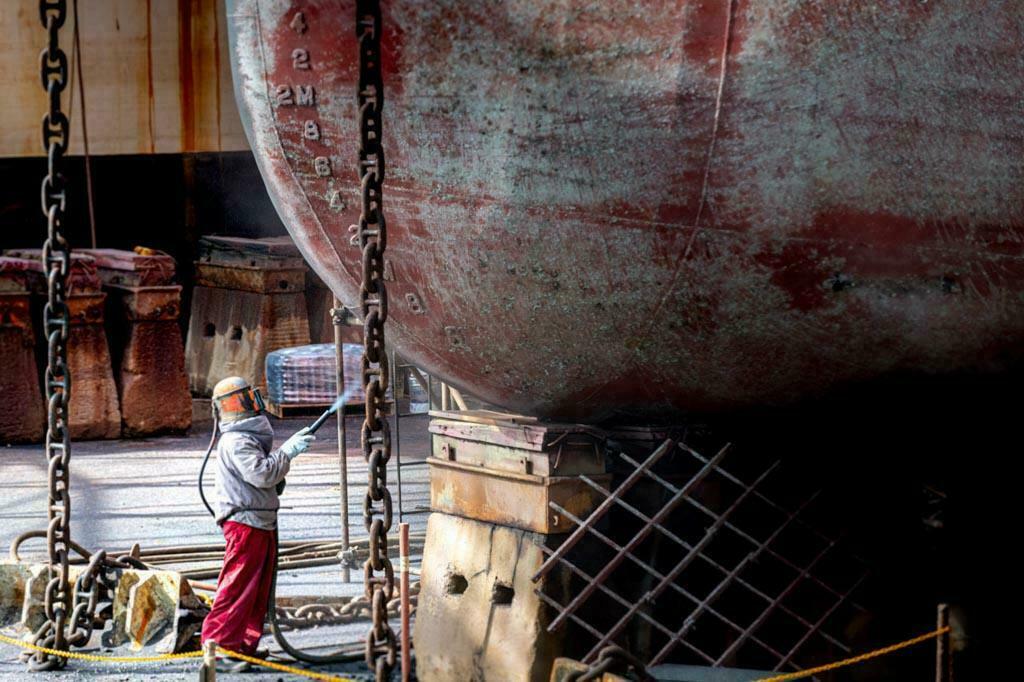
A shipyard worker with a blasting lance at the bulbous bow, anchor chains hanging alongside. Vessel refurbishment photography in Singapore.
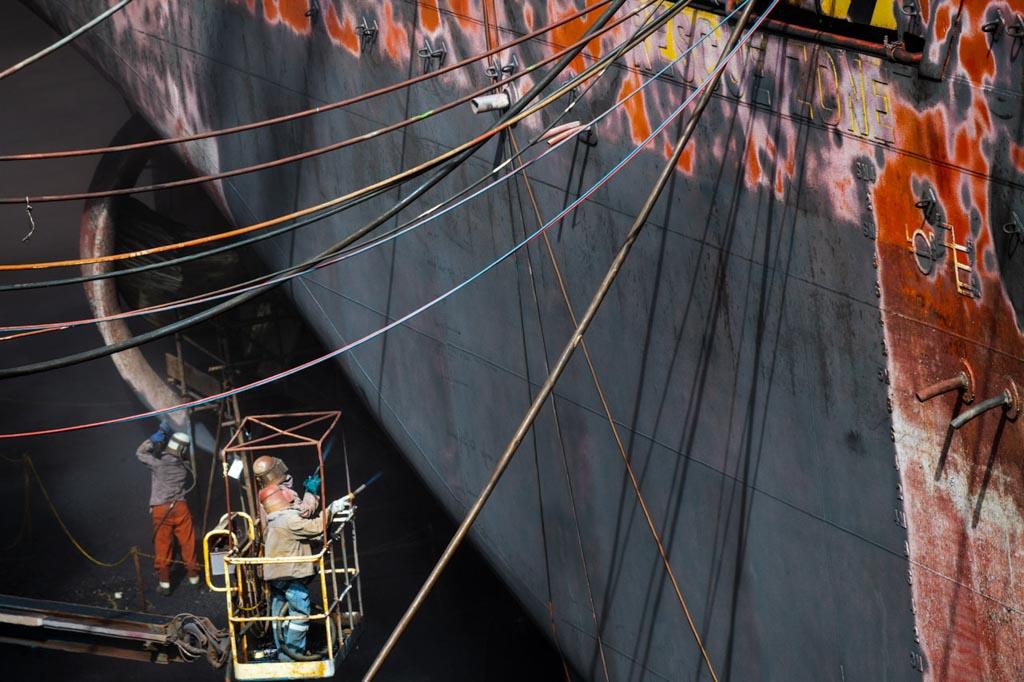
Once the dock is dry, sandblasting to remove all the old painting started. Besides documenting the initial condition of the vessel, the human elements at work are also as important.
A worker in a boom-lift cradle blasting the stern hull plating, cables strung across the hull. Industrial process documentation in Singapore.
The sandblasting is done in a systematic manner in order to ensure the paint cleared completely
The JP88 Stork's bow on the dock, the old orange paint blasted back to grey in patches. Vessel refurbishment photography in Singapore.
The lower portion of the vessels with its old paint removed from the sandblasting
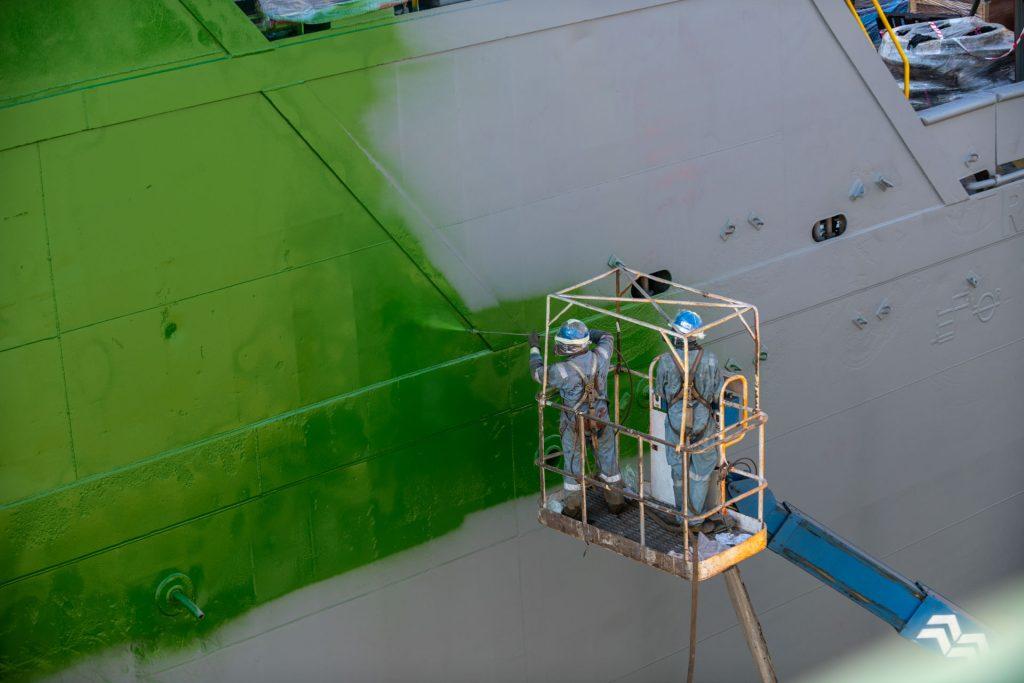
Painters in a boom-lift cradle applying the first protective coat to the blasted hull. Shipyard progress documentation in Singapore.
After sandblasting is completed, the first coat of protective paint is applied onto the vessel. To provide a full visual content of ship refurbishing coverage for its clients, Tuckys Photography’s maritime industrial photographer will also include people at work. As these will give a variety for the marketing images. More importantly, it shows the scale of the work of the project.
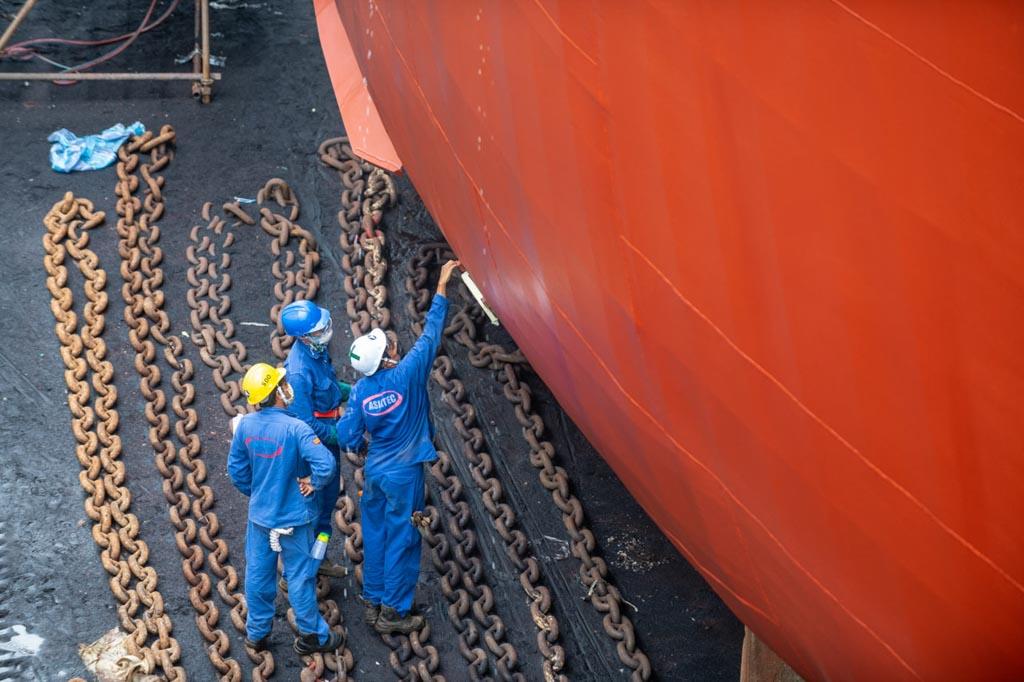
Top-down view of two shipyard workers in hard hats beside the bow, the anchor chain ranged out on the dock floor. Industrial process documentation.
To create a more dynamic series of marketing images for its clients, Tuckys Photography captures the marine servicing images from a different perspective. Here Tuckys Photography chose a higher angle to capture a top-down perspective of the inspection.

Painting of outer layer

A painter in a cradle spraying the green topcoat over the grey base coat. Vessel refurbishment photography of the JP88 Stork in Singapore.
Painters paint the 2nd coat over the marine craft. Professional Maritime photography of ship refurbishing in progress.
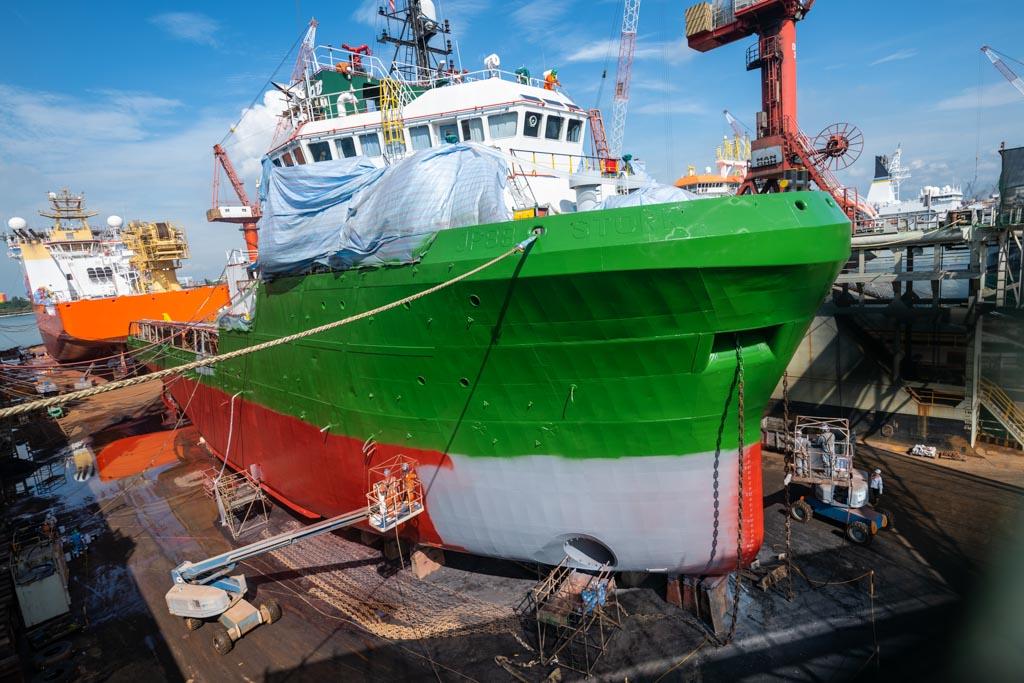
The JP88 Stork on the dock with new green topsides and a red lower hull. Shipyard progress documentation in Singapore.
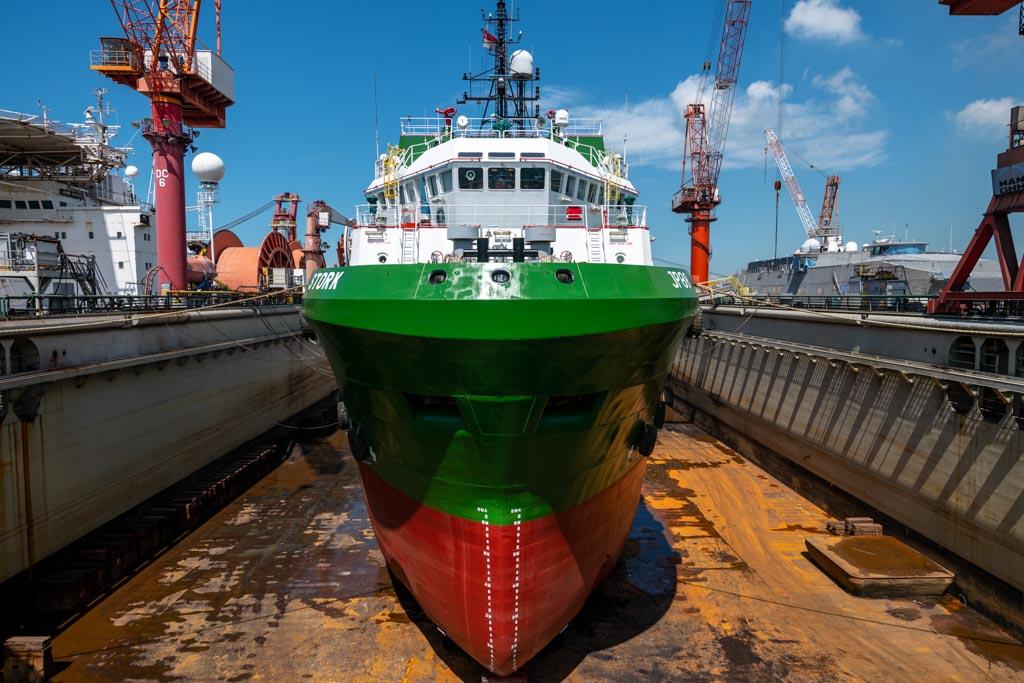
There are 2 base coats. First is the red protective coat followed by the light grey base coat, these 2 layers will help to protect the vessel from rusting. The image shows 2 third coats of paint at different sections of the vessel. green at the top and red at the bottom.
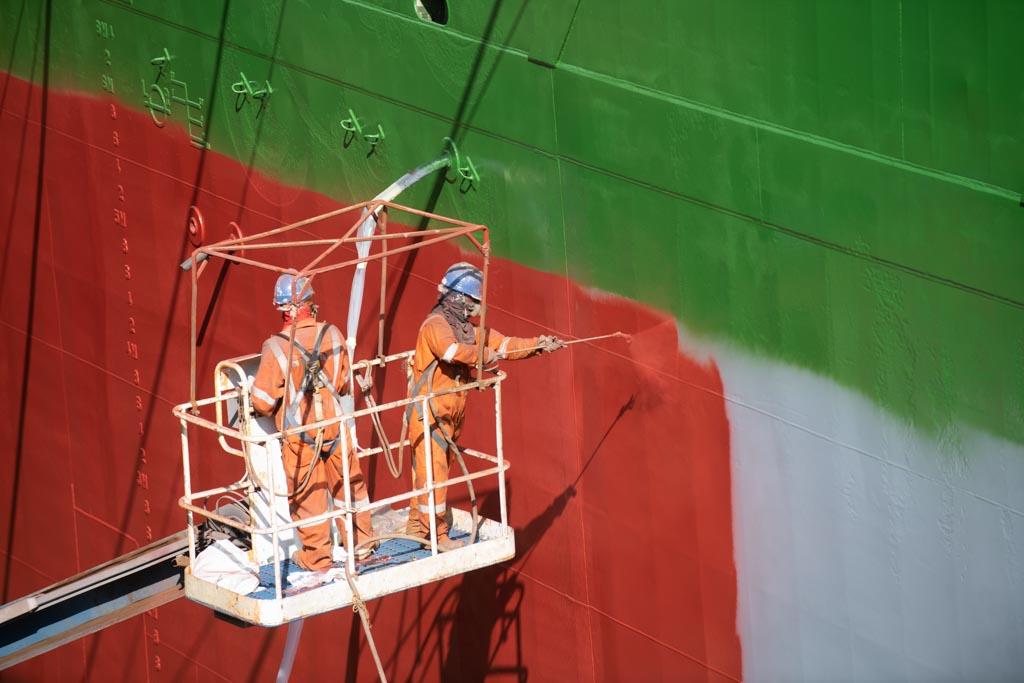
Painters in a cradle cutting in the line between the red lower hull and the green topcoat. Vessel refurbishment photography in Singapore.
Closeup view of the painting crew applying the bottom outer paint onto the vessels. The top coat of green is dry before the bottom outer coat commenced.
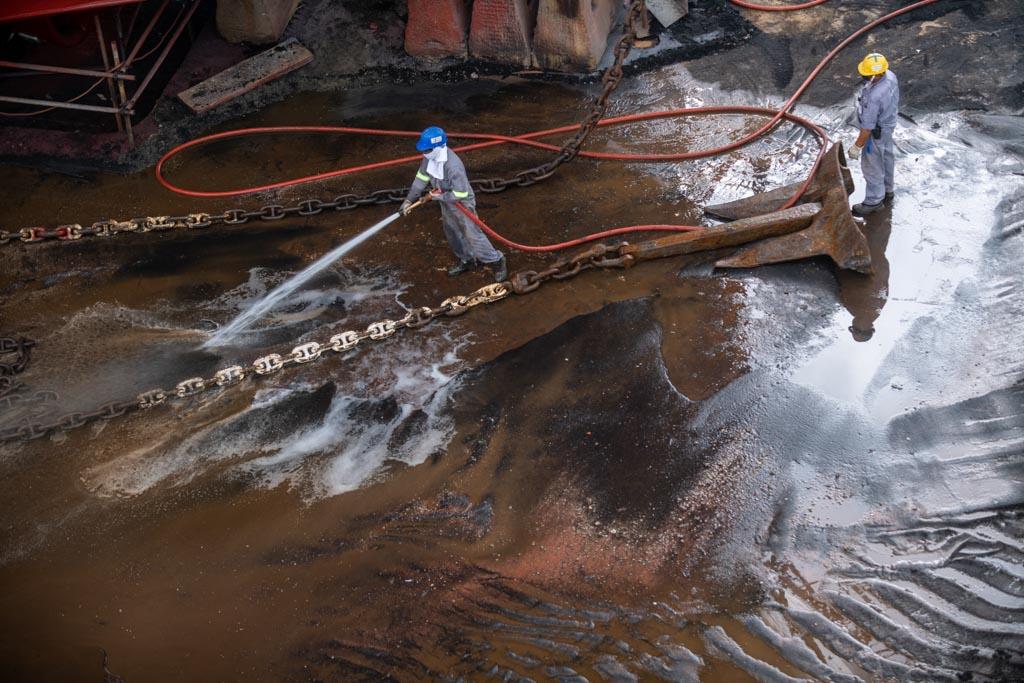
Top-down view of two workers water-blasting the anchor chain on the dock floor. Marine engineering documentation in Singapore.
A servicing crew water blasting the anchor to remove the rust and barnacles. This will help to ensure the functionality of the anchor for more effective deployment.
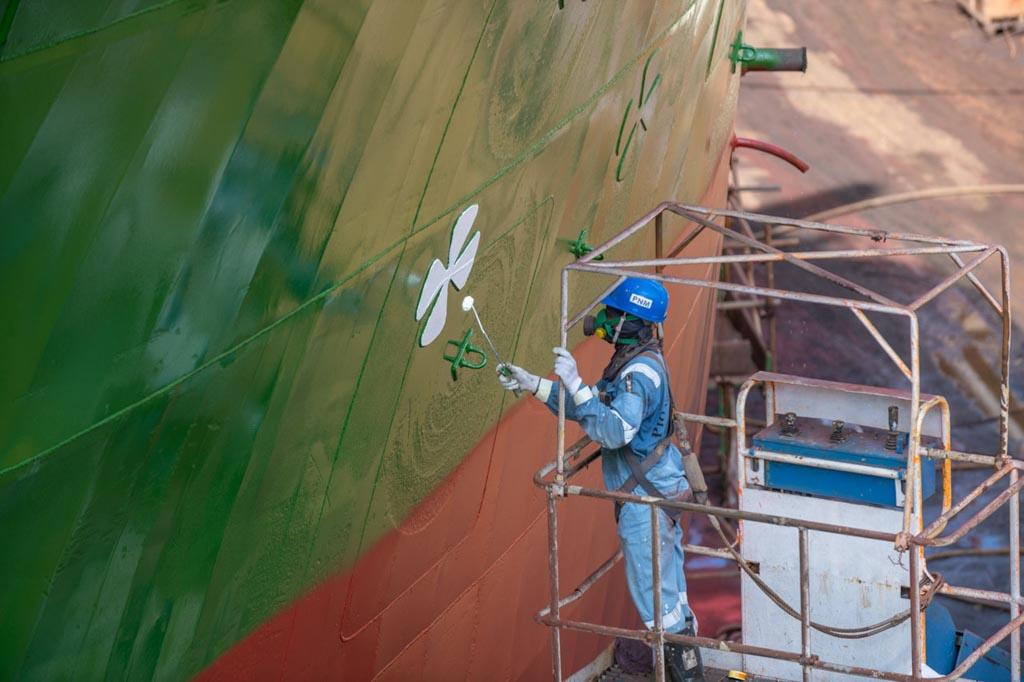
A painter in a cradle adding white design details to the green hull. Vessel refurbishment photography of the JP88 Stork.
The painter painted the details of the vessel design in white.
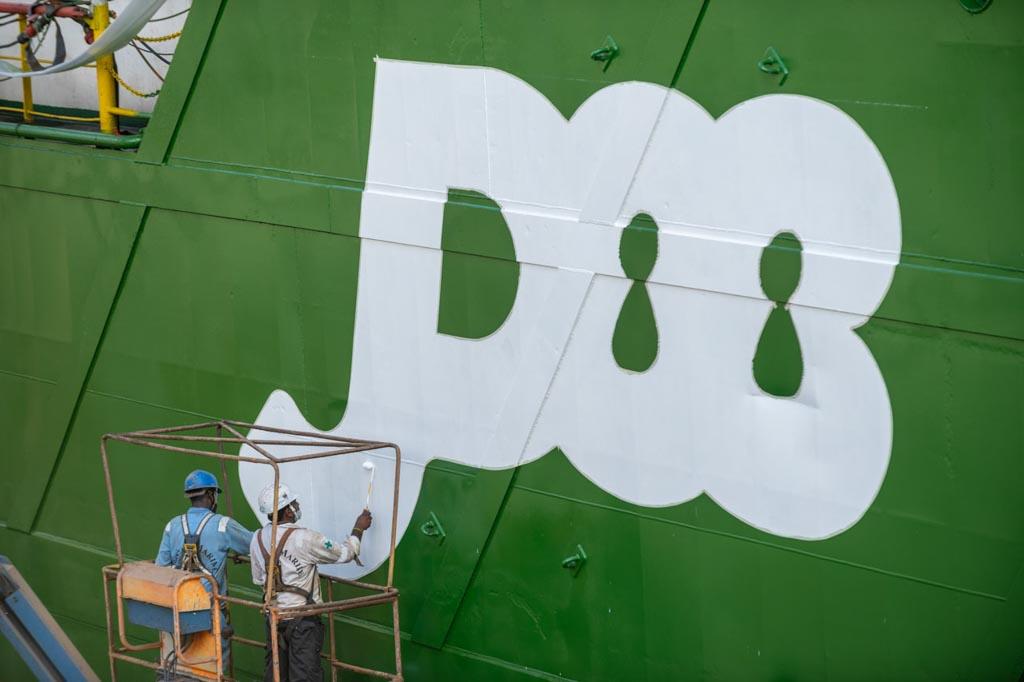
The large white JP88 logo on the green hull, a painter in a cradle below. Industrial process documentation in Singapore.
The maritime image shows the last step of the detailing is the painting of the logo. The vessel will soon be ready to return back to sea to continue her work.

Maritime Images of the completed vessel
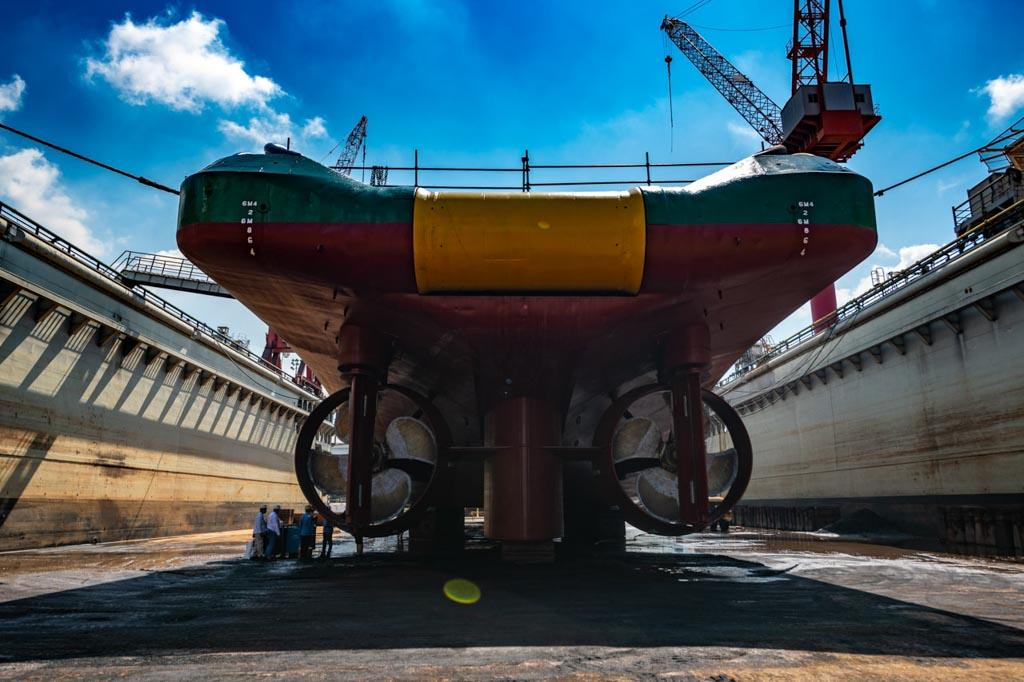
The stern seen from astern on the dock: twin kort nozzles, propellers and rudders. Marine engineering documentation in Singapore.
The final round of inspection and the vessel is ready to get back into the water
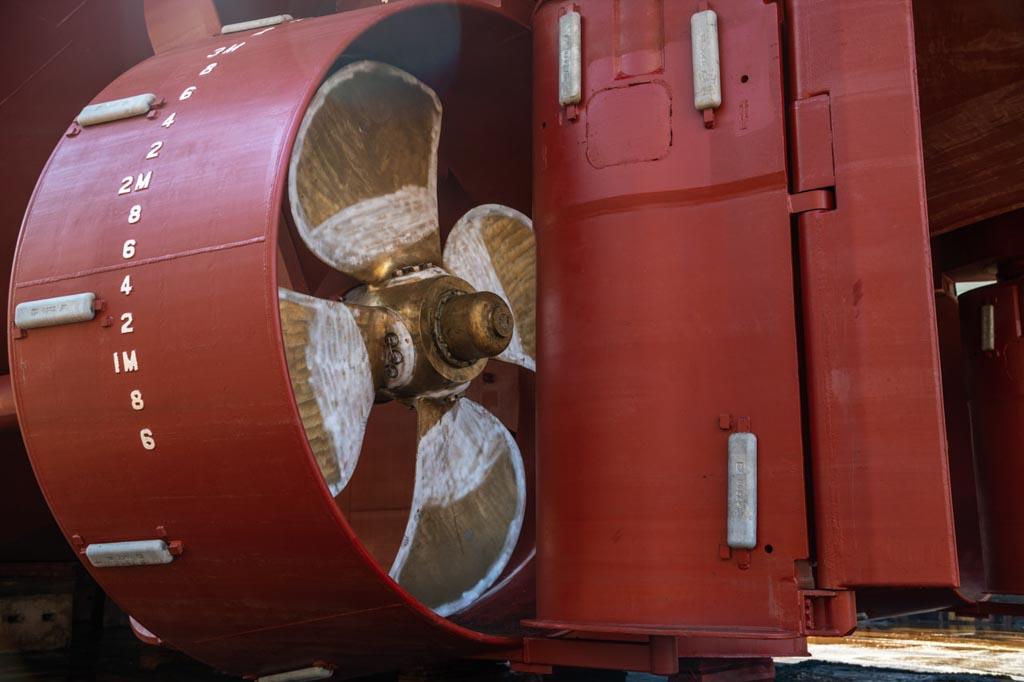
A kort nozzle with its gold-coated propeller beside white depth markings. Marine engineering documentation of the JP88 Stork.
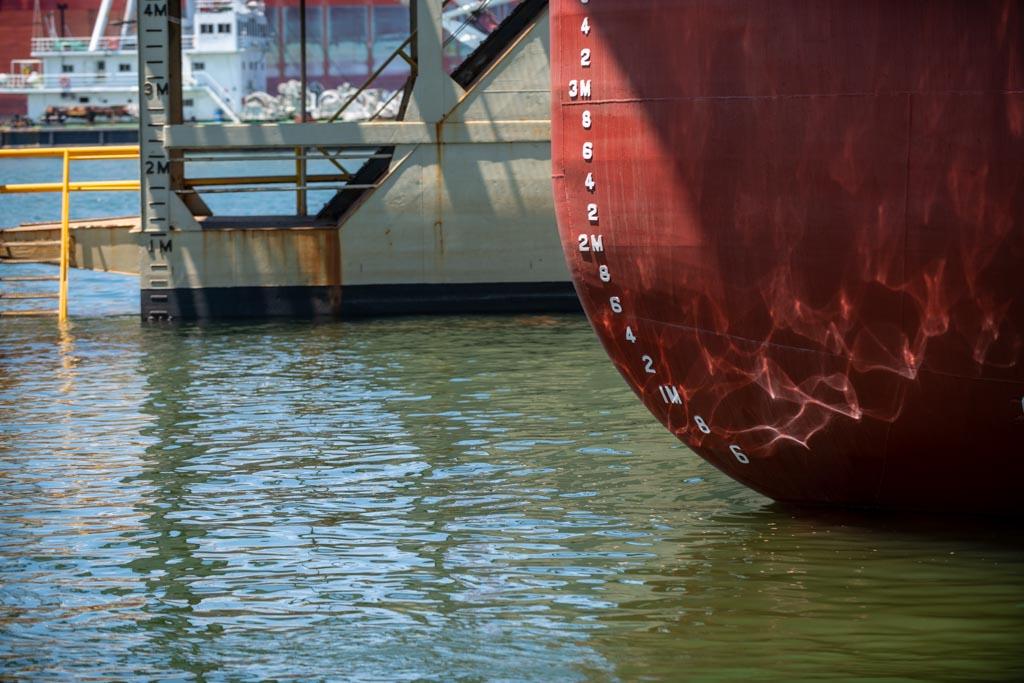
A new shiny gold paint covers the propellers thus helping to reduce drag and improve the efficiency of the propellers. The visibility of the depth marking also improves with a new coat of white paint.
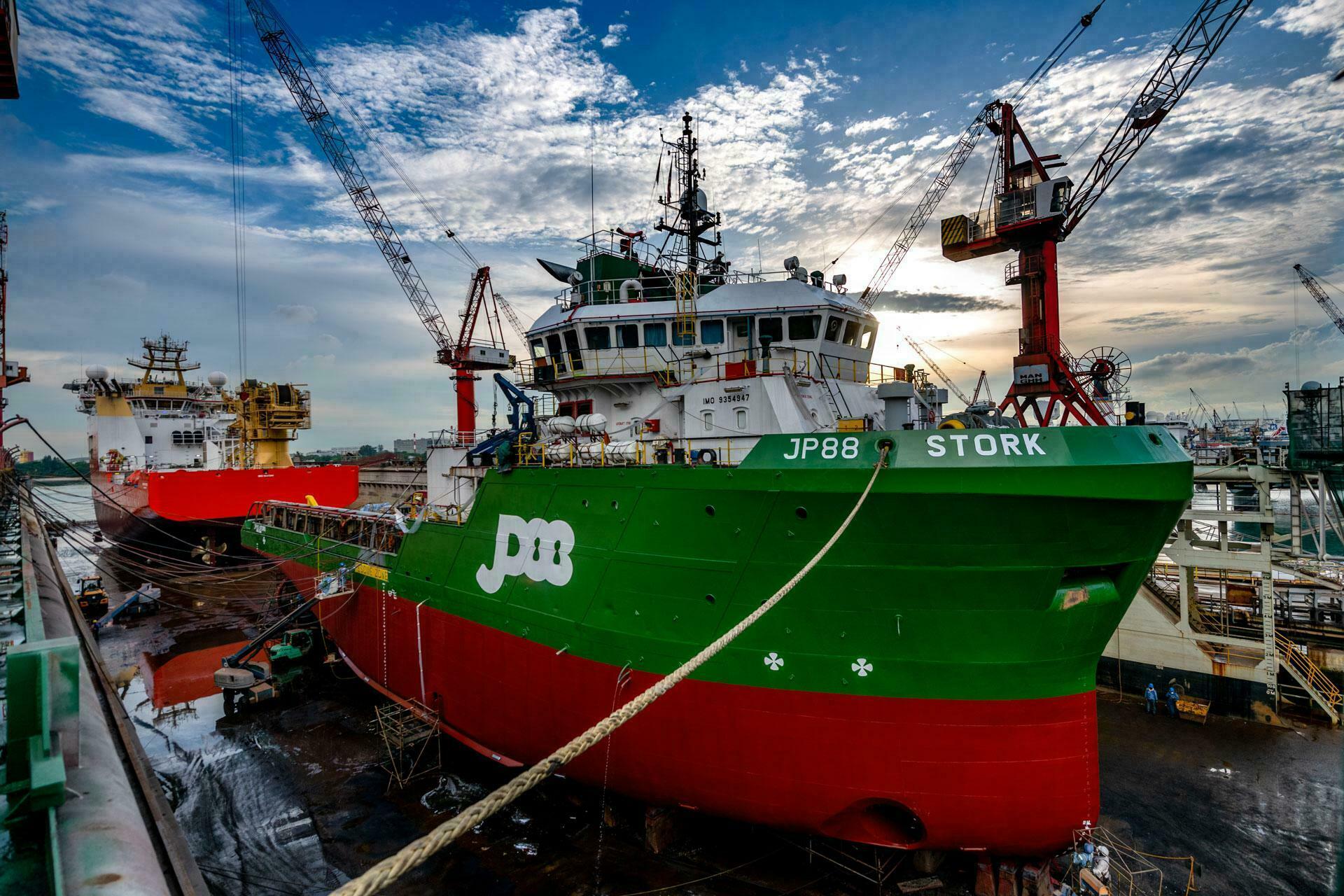
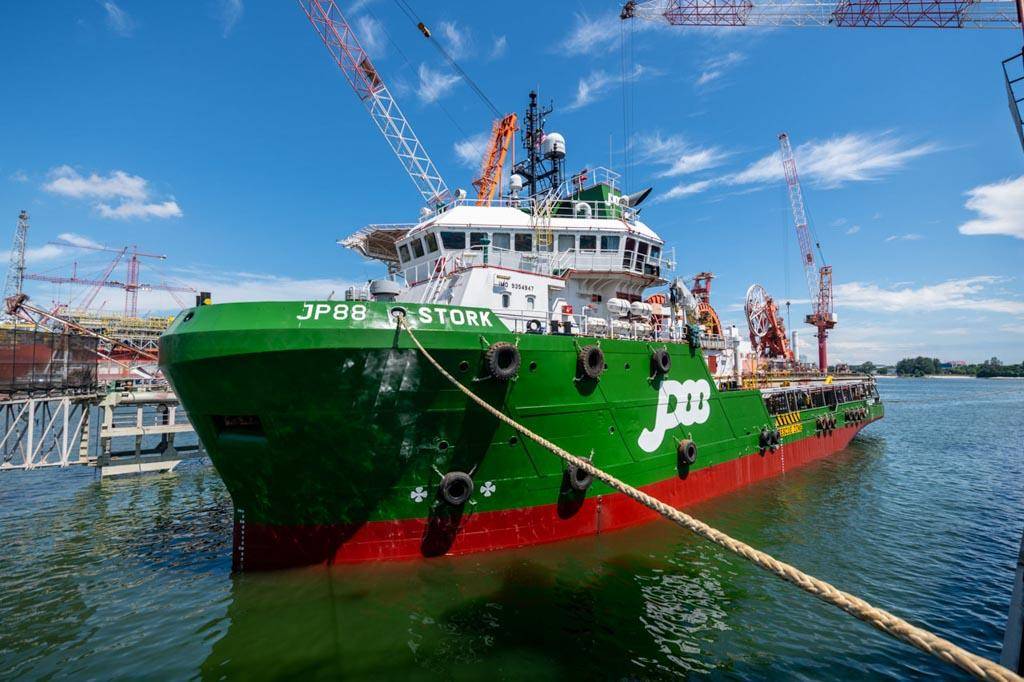
The JP88 Stork repainted in green, red and white with her name on the bow, in the shipyard. Vessel refurbishment photography in Singapore.
The fully painted vessel gleaming under the beautiful sky. Refurbished at Keppel Shipyard, commissioned by Strategic Marine.
The JP88 Stork bow-on in the dock after refurbishment, green topsides over a red lower hull. Maritime photography in Singapore.
The refurbished vessel with a new contemporary look of white, green and red.
Water rising around the red hull and its white draft marks as the submersible dock lowers. Shipyard progress documentation in Singapore.
The submersible dock slowly lowers into the water and will soon be covering the depth markings.
The JP88 Stork afloat and moored after her refurbishment, her name on the bow. Maritime photography in Singapore.
JP88 Stork is ready to disembark as soon as the dock gets fully submerged and the vessel,

Check out more of Tuckys Photography’s Industrial projects here.

Maritime photography and videography of fast crew boat marketing video

Docking and stripping the hull

A harbour tug guides JP88 Stork into the submersible dock to begin. The dock then rises, and the water drains away over eight to twelve hours. Once the floor is dry, the state of the hull is plain to see. The protective paint along the bottom has gone, so she needs servicing.

Sandblasting starts next. The crew work across the hull systematically, because the old paint has to come off completely before anything new goes on. Meanwhile the anchor chain lies ranged out along the dock floor. A servicing crew water-blasts the anchor to strip the rust and barnacles, which matters for more than appearance. A clean anchor deploys properly.

How the paint system goes on

Each layer has a job. First comes a red protective coat, then a light grey base coat. Together those two layers keep the steel from rusting. Only then do the topcoats follow, green above and red below.

Timing matters here. The green topcoat has to dry before the crew start the bottom outer coat. Afterwards the detailing goes on in white, and the logo is painted last of all.

Back into the water

Below the waterline the propellers take a coat of gold paint, which reduces drag and improves their efficiency. Fresh white paint brings the depth markings back to full visibility at the same time. After a final inspection the dock floods again, the markings disappear beneath the surface, and the vessel is ready to sail.

She leaves in white, green and red. That contemporary livery looks nothing like the worn utility craft towed in at the start.

Why a shipyard commissions maritime photography

Photography of this kind promotes what a yard actually does. Vessel owners get a clearer view of the services on offer, and of the scale of the work behind them. As a result, the images bridge the understanding between a shipyard and its clients.

The people matter as much as the vessel. Documenting the initial condition of a hull is necessary, but so is showing the crews who do the work.

28m fast crew boat with Sam Aluminium

Related project: Singapore offshore maritime photography and videography — documenting the later stages of a catamaran new build for a local shipyard, from the yard through to launch and sea trial.

For refits and deliveries, Tuckys Photography can also photograph the vessel from the air, before and after the work.

Industrial process documentation: the JP88 Stork refurbishment

Strategic Marine commissioned the refurbishment of the JP88 Stork and placed the vessel at Keppel Shipyard for the work; Tuckys Photography documented the process, from docking to her return to the water.

The JP88 Stork series is industrial process documentation: the refurbishment is recorded stage by stage, from the tug guiding the vessel into the submersible dock, through sandblasting and each coat of the paint system, to the dock lowering and the vessel leaving afloat.

Tuckys Photography groups this work with its other process and documentation projects, such as NEA’s waste management from Tuas to Semakau.

Vessel refurbishment photography and shipyard progress documentation in Singapore

As vessel refurbishment photography, the series doubles as shipyard progress documentation in Singapore: it records the initial condition of the hull, each coat of paint as it goes on and the finished vessel, and it shows the crews doing the work.

Marine engineering documentation and construction progress photography

The marine engineering documentation covers what sits below the waterline: the anchor water-blasted to remove rust and barnacles, the propellers coated in gold paint to reduce drag and improve their efficiency, and the depth markings repainted white so they can be read again.

On land, Tuckys Photography’s construction progress photography includes the precast bridge lifts filmed at the Gallop Extension of the Singapore Botanic Gardens, shown on the industrial photography and videography page.

Marine and shipyard photography in Singapore

Marine photography in Singapore and shipyard photography cover vessel photography during ship refurbishment photography, ship repair photography and new build vessel photography, in dry dock photography conditions and at the quay.

Maritime videography in Singapore, marine vessel videography and shipyard videography are produced alongside the stills, so maritime industry photography, maritime marketing photography, port photography and vessel refurbishment photography come from one ship photographer in Singapore.

A maritime photographer in Singapore and marine photographer for ship refurbishment videography, vessel conversion photography, marine engineering photography and shipyard industrial photography, producing maritime documentation photography and vessel photography and videography in Singapore for owners, yards and class records.

Maritime Photography Singapore, Old Vessels to New BuildsEditorial Team
1
Verified by MonsterInsights