


Professional corporate portrait photography is a potent marketing tool, meticulously crafted to showcase a corporation positively. It communicates competence and professionalism. At the same time, it also fosters credibility and trust with stakeholders and potential customers. In the realm of corporate representation, these portraits are a concise and powerful means of making a lasting impression.
Tip 1 – Understanding the Characteristics of a Professional Corporate Portrait Photography Singapore


Professional corporate portrait photography is not just about capturing the personality of the subject, but rather the personality that is in line with the corporation’s identity.
The most common mistake seen in corporate portraits is the confusion between corporate portraits and other forms of portraits, especially resume portraits. We must first understand the characteristics of a corporate portrait in order to differentiate between them.
- Branding: Professional corporate portrait photography can help to convey the corporation’s branding, philosophy and direction. A resume portrait is typically more neutral. Resume portraits usually present the individuals in a friendly and approachable manner.
- Personality: Professional studio corporate headshot showcase the subject’s personality that is in line with the corporation’s identity. They can also reflect the subject’s role and position within the company. For instance, their confidence, charisma and authority.
- Purpose: Professional corporate portrait photography is used for annual reports, public relations (editorial or press release) and marketing purposes (company website). These portraits need to represent the corporate image and relate to its stakeholders.
- Audience: The audience for a corporate portrait is broad. They can range from potential customers to investors and even the general public. Hence, how the subject is portrayed needs to be carefully thought about before starting the photo shoot.
Tip 2 – Focusing on the Eyes
Where words are restrained, the eyes often talk a great deal
Samuel Richardson
The eyes are the windows to the soul. They convey emotions and character to the viewer, inviting them to engage and communicate. The eyes serve as a focal point, leaving a visual impact on viewers. Here are a few points in which the focus from the eyes enhances a corporate portrait.
- Convey Professionalism: A pair of focused eyes reflect competency, professionalism and credibility. Well-captured eyes evoke positive emotions and favourable perceptions
- Establish Authenticity: Eye contact can establish trust and foster a strong connection with viewers, enhancing the subject’s authenticity. A truthful eye conveys sincerity, passion and dedication. They make the subject relatable, therefore humanizing the corporate environment
- Connect with the Audience: The eyes serve as a focal point, captivating the viewers. Direct eye contact signals that the person is transparent and reliable, reinforcing the perception of trustworthiness.
Individual headshots for the Leadership Team

3. Comfort, Confidence, and the Tethered Workflow
Most senior executives are not comfortable in front of a camera. They are accustomed to commanding rooms, not posing for photographs — and the discomfort shows instantly in the portrait if the session is not managed correctly. Our approach is built on three principles: thorough pre-session briefing so the subject knows exactly what to expect; a session structure that begins with easier, lower-stakes shots to build confidence before moving to the most important setups; and a tethered live-view workflow that allows both photographer and subject to review images in real time on a colour-calibrated monitor.
The tethered workflow is particularly important for executive portrait sessions. When a subject can see the image immediately after it is taken — in accurate colour and exposure on a calibrated screen — they can provide feedback, understand what is working, and make micro-adjustments to expression, posture, and engagement. It eliminates the anxiety of not knowing whether the photographs are working, which is one of the primary sources of tension in executive portrait sessions. Every senior executive we work with leaves the session having seen images they are confident in — which is not an accident. It is the result of a deliberate production process.


4. Time Is Not a Variable You Should Compress
Executive portrait sessions are routinely under-timed. Communications teams, conscious of their leaders’ schedules, allocate 15 or 20 minutes for a portrait session that requires 45. The result is a rushed session, a tense subject, and images that reflect exactly the pressure everyone was under. The paradox is that attempting to save 30 minutes of an executive’s time produces images that will be used for the next two or three years — images that will shape perceptions of that leader and the organisation across every communications context in which they appear.
For key personnel at department head level, 10 to 20 minutes is appropriate for a clean, consistent portrait suitable for intranets and team pages. For leadership team members whose portraits appear in press releases, annual reports, and client-facing communications, 20 to 45 minutes allows the deliberate, iterative work that produces compelling results. For the most senior executives — regional presidents, CEOs, and board members — sessions of 45 minutes or more allow multiple setups, lighting approaches, and portrait styles in a single sitting, delivering a complete portrait portfolio that serves every communications context across the year without requiring the executive to be photographed again.


5. Tone, Authority, and the Expression Beyond the Smile
The instinctive direction most people receive before a photograph is “smile.” For an executive portrait at C-suite level, this is often the wrong instruction. A warm, open smile communicates approachability — which is valuable in some portrait contexts but can actively undermine the authority and gravitas that the most senior executive portraits are required to convey. The most powerful expression in an executive portrait is a controlled, subtle confidence — not cold or severe, but composed and present. An expression that communicates: this person knows what they are doing, and you can trust them with decisions that matter.
Achieving this expression requires direction, not instruction. Rather than telling a subject to adopt a specific expression — which produces self-conscious results — we create the conditions in which the right expression emerges naturally: through conversation that is genuinely engaging, through building the session toward a moment of ease and presence, and through years of experience recognising and capturing that moment the instant it appears.

6. Studio vs Environmental: Choosing the Right Setting
There are two primary settings for executive portrait photography, and the choice between them should be driven by the purpose of the portrait and the story you need to tell — not by convenience or default.
Studio Setting
A studio setup — whether in a dedicated studio or brought on-location to your office or boardroom — uses controlled lighting against a monochrome background (typically white, grey, black, or a corporate brand colour) to produce clean, consistent, and visually unified portraits. Studio portraits are ideal for leadership team profiles, annual reports, and any context where visual consistency across multiple subjects is the priority. Because the background is constant, the series reads as a coherent whole regardless of the physical differences between subjects — which is particularly important when photographing regional leadership teams across multiple APAC markets where background and lighting consistency must be maintained across different shoot locations.


Environmental Setting
Environmental portraits are set in the leader’s own workspace, office, or a contextually significant location — and they carry a level of presence and authority that pure studio work cannot replicate. When the setting is chosen and lit carefully, the environment adds narrative depth to the portrait: it communicates the world the person operates in, the weight of what they do, and the context that defines their leadership. Environmental portraits are the standard for editorial coverage in business publications, for the most senior leadership profiles in annual reports, and for any context where the portrait needs to tell a story rather than simply identify a person.
The key discipline in environmental portrait photography is control of the space. Every element in the frame must either contribute to the story or be removed. Distracting backgrounds, inconsistent lighting, and poorly framed environments are the most common failures in this category of work. We recce every location before the session — understanding the light at the specific time of day the shoot will occur, identifying the strongest positions, and planning exactly which setups will be executed and in what order. The result is environmental portraits that read as deliberately conceived images, not documentary photographs taken opportunistically.


7. Multi-Market APAC Executive Portrait Programmes
For multinational organisations with leadership teams distributed across the Asia-Pacific region, the challenge is not simply producing excellent portraits — it is producing excellent portraits that form a visually coherent whole across leaders photographed in different countries, cities, and offices over an extended period. Visual inconsistency in a leadership portrait series undermines the impression of organisational cohesion that the images are intended to project.
Our approach to multi-market executive portrait programmes begins with a detailed visual brief that specifies every production parameter: lighting ratios and colour temperature, background treatment, focal length range, subject positioning, clothing guidance, and post-production specifications. This brief is followed precisely at every shoot location across the programme — Singapore, Kuala Lumpur, Hong Kong, Jakarta, Sydney, Melbourne, or wherever the leadership team is based. The result is a portrait series in which every image belongs to the same visual family, regardless of where it was taken.
Dell Technologies’ APJ Leadership Team portraits and Warner Bros. Discovery’s regional leadership programmes across India, Southeast Asia, and Korea are examples of the kind of coordinated, multi-market executive portrait engagement where this level of production discipline is both required and delivered.

8. High-End Retouching: The Standard That Published Portraits Require
Executive portraits that will appear in major business publications, investor communications, or high-profile corporate materials require a level of post-production that goes significantly beyond standard retouching. The benchmark is simple: the image must be ready to publish without any modification by an editorial team or communications department. When our retouched executive portraits appear in the business press — as they regularly do — they go to print exactly as delivered, because the retouching is precise, invisible, and calibrated to the output medium.
Our high-end retouching process for executive portraits uses frequency separation to refine skin texture while preserving the natural character of the subject’s face, precise dodging and burning to sculpt light across facial features, background cleaning and consistency correction, and colour grading calibrated to the specific output context — different profiles for print annual reports, digital media, and broadcast use. The goal is a portrait that looks definitively like the person, at the absolute peak of their presentation, with no trace of the retouching process visible to anyone who sees the finished image.


The C-Suite Executive Portrait: A Definitive Guide for Singapore and APAC Organisations
A C-suite executive portrait is one of the most commercially and reputationally significant photographs an organisation commissions. It appears in annual reports read by investors, on the cover pages of media kits reviewed by journalists, at the top of corporate websites visited by clients and partners, and in the board presentations that shape how an organisation is perceived at the highest levels of business. And yet it is routinely under-budgeted, under-prepared, and handed to photographers who do not understand the specific demands of working at this level.
This guide draws on nearly three decades of executive and corporate portrait photography experience in Singapore and across the Asia-Pacific region — with clients including Dell Technologies APJ Leadership, Warner Bros. Discovery India, Southeast Asia and Korean Leadership Teams, eBay Vice-President and CEO Greater China, Sony APAC and Japan Board of Directors, and senior leaders presented by the Singapore International Festival of Arts (SIFA). What follows is what we have learned about what makes an executive portrait exceptional — and how to commission one that does justice to the person in it and the organisation they represent.


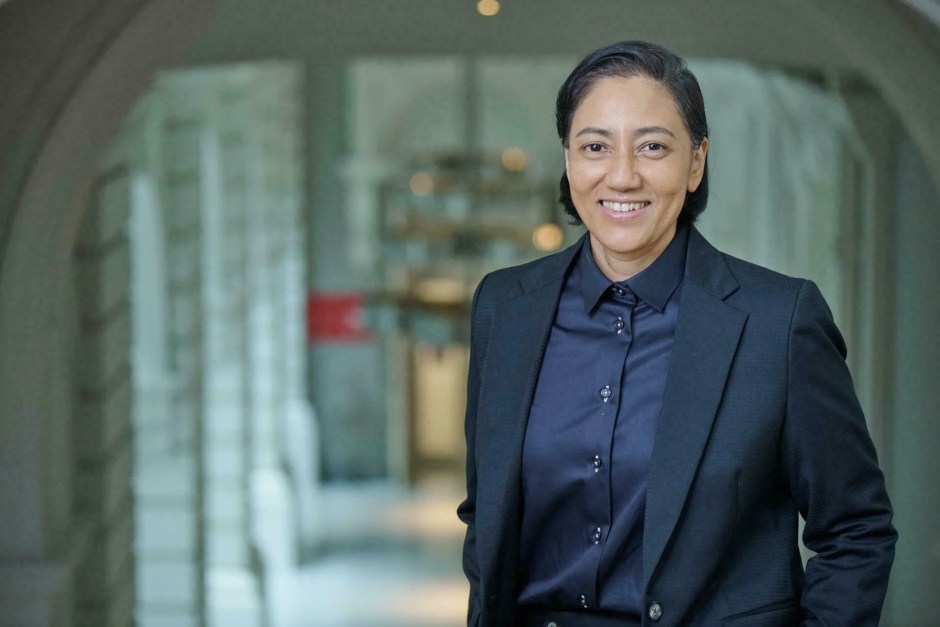


1. The Corporate Portrait Is Not a Headshot
The most common error organisations make when commissioning executive portraits is confusing them with headshots. A headshot is functional — it identifies a person and suits an intranet profile or a security pass. A corporate portrait for a C-suite leader is an entirely different category of work. It must communicate authority, judgment, and personal gravity. It must project the qualities — competence, trustworthiness, strategic vision — that cause a board member, an investor, or a major client to form an immediate positive impression of the organisation through the person in the photograph.
This distinction shapes every decision in the production process: how much time is allocated, how the environment is chosen or constructed, how the lighting is built, how the subject is directed, and how the final image is retouched. Organisations that treat an executive portrait as a faster, more expensive headshot consistently produce portraits that look like faster, more expensive headshots — which is not what their most senior leaders deserve, and not what the stakeholders reviewing those images expect.
2. The Eyes Are the Portrait
In any portrait, the eyes carry the emotional and psychological weight of the image. In an executive portrait specifically, the eyes must communicate focus, confidence, and directness — the qualities that signal to every viewer that this is a person who is in command of their environment and worth listening to. A technically flawless photograph with uncertain or distracted eyes will still fail as an executive portrait. A photograph with slightly imperfect lighting but eyes that are fully present and engaged will succeed.
Achieving this requires the photographer to create genuine connection with the subject — not through technical instruction, but through conversation, direction, and the kind of interpersonal ease that allows a busy executive to momentarily stop thinking about their next meeting and be fully present in the room. This is not a skill that can be acquired quickly. It is built over years of working with senior leaders across cultures and industries, understanding what makes each person comfortable, and knowing exactly when to press the shutter.
Professional corporate portrait photography is a potent marketing tool, meticulously crafted to showcase a corporation positively. It communicates competence and professionalism. At the same time, it also fosters credibility and trust with stakeholders and potential customers. In the realm of corporate representation, these portraits are a concise and powerful means of making a lasting impression.
Tip 1 – Understanding the Characteristics of a Professional Corporate Portrait Photography Singapore
Professional corporate portrait photography is not just about capturing the personality of the subject, but rather the personality that is in line with the corporation’s identity.
The most common mistake seen in corporate portraits is the confusion between corporate portraits and other forms of portraits, especially resume portraits. We must first understand the characteristics of a corporate portrait in order to differentiate between them.
- Branding: Professional corporate portrait photography can help to convey the corporation’s branding, philosophy and direction. A resume portrait is typically more neutral. Resume portraits usually present the individuals in a friendly and approachable manner.
- Personality: Professional studio corporate headshot showcase the subject’s personality that is in line with the corporation’s identity. They can also reflect the subject’s role and position within the company. For instance, their confidence, charisma and authority.
- Purpose: Professional corporate portrait photography is used for annual reports, public relations (editorial or press release) and marketing purposes (company website). These portraits need to represent the corporate image and relate to its stakeholders.
- Audience: The audience for a corporate portrait is broad. They can range from potential customers to investors and even the general public. Hence, how the subject is portrayed needs to be carefully thought about before starting the photo shoot.
Tip 2 – Focusing on the Eyes
Where words are restrained, the eyes often talk a great deal
Samuel Richardson
The eyes are the windows to the soul. They convey emotions and character to the viewer, inviting them to engage and communicate. The eyes serve as a focal point, leaving a visual impact on viewers. Here are a few points in which the focus from the eyes enhances a corporate portrait.
- Convey Professionalism: A pair of focused eyes reflect competency, professionalism and credibility. Well-captured eyes evoke positive emotions and favourable perceptions
- Establish Authenticity: Eye contact can establish trust and foster a strong connection with viewers, enhancing the subject’s authenticity. A truthful eye conveys sincerity, passion and dedication. They make the subject relatable, therefore humanizing the corporate environment
- Connect with the Audience: The eyes serve as a focal point, captivating the viewers. Direct eye contact signals that the person is transparent and reliable, reinforcing the perception of trustworthiness.
Individual headshots for the Leadership Team
3. Comfort, Confidence, and the Tethered Workflow
Most senior executives are not comfortable in front of a camera. They are accustomed to commanding rooms, not posing for photographs — and the discomfort shows instantly in the portrait if the session is not managed correctly. Our approach is built on three principles: thorough pre-session briefing so the subject knows exactly what to expect; a session structure that begins with easier, lower-stakes shots to build confidence before moving to the most important setups; and a tethered live-view workflow that allows both photographer and subject to review images in real time on a colour-calibrated monitor.
The tethered workflow is particularly important for executive portrait sessions. When a subject can see the image immediately after it is taken — in accurate colour and exposure on a calibrated screen — they can provide feedback, understand what is working, and make micro-adjustments to expression, posture, and engagement. It eliminates the anxiety of not knowing whether the photographs are working, which is one of the primary sources of tension in executive portrait sessions. Every senior executive we work with leaves the session having seen images they are confident in — which is not an accident. It is the result of a deliberate production process.
4. Time Is Not a Variable You Should Compress
Executive portrait sessions are routinely under-timed. Communications teams, conscious of their leaders’ schedules, allocate 15 or 20 minutes for a portrait session that requires 45. The result is a rushed session, a tense subject, and images that reflect exactly the pressure everyone was under. The paradox is that attempting to save 30 minutes of an executive’s time produces images that will be used for the next two or three years — images that will shape perceptions of that leader and the organisation across every communications context in which they appear.
For key personnel at department head level, 10 to 20 minutes is appropriate for a clean, consistent portrait suitable for intranets and team pages. For leadership team members whose portraits appear in press releases, annual reports, and client-facing communications, 20 to 45 minutes allows the deliberate, iterative work that produces compelling results. For the most senior executives — regional presidents, CEOs, and board members — sessions of 45 minutes or more allow multiple setups, lighting approaches, and portrait styles in a single sitting, delivering a complete portrait portfolio that serves every communications context across the year without requiring the executive to be photographed again.
5. Tone, Authority, and the Expression Beyond the Smile
The instinctive direction most people receive before a photograph is “smile.” For an executive portrait at C-suite level, this is often the wrong instruction. A warm, open smile communicates approachability — which is valuable in some portrait contexts but can actively undermine the authority and gravitas that the most senior executive portraits are required to convey. The most powerful expression in an executive portrait is a controlled, subtle confidence — not cold or severe, but composed and present. An expression that communicates: this person knows what they are doing, and you can trust them with decisions that matter.
Achieving this expression requires direction, not instruction. Rather than telling a subject to adopt a specific expression — which produces self-conscious results — we create the conditions in which the right expression emerges naturally: through conversation that is genuinely engaging, through building the session toward a moment of ease and presence, and through years of experience recognising and capturing that moment the instant it appears.
6. Studio vs Environmental: Choosing the Right Setting
There are two primary settings for executive portrait photography, and the choice between them should be driven by the purpose of the portrait and the story you need to tell — not by convenience or default.
Studio Setting
A studio setup — whether in a dedicated studio or brought on-location to your office or boardroom — uses controlled lighting against a monochrome background (typically white, grey, black, or a corporate brand colour) to produce clean, consistent, and visually unified portraits. Studio portraits are ideal for leadership team profiles, annual reports, and any context where visual consistency across multiple subjects is the priority. Because the background is constant, the series reads as a coherent whole regardless of the physical differences between subjects — which is particularly important when photographing regional leadership teams across multiple APAC markets where background and lighting consistency must be maintained across different shoot locations.
Environmental Setting
Environmental portraits are set in the leader’s own workspace, office, or a contextually significant location — and they carry a level of presence and authority that pure studio work cannot replicate. When the setting is chosen and lit carefully, the environment adds narrative depth to the portrait: it communicates the world the person operates in, the weight of what they do, and the context that defines their leadership. Environmental portraits are the standard for editorial coverage in business publications, for the most senior leadership profiles in annual reports, and for any context where the portrait needs to tell a story rather than simply identify a person.
The key discipline in environmental portrait photography is control of the space. Every element in the frame must either contribute to the story or be removed. Distracting backgrounds, inconsistent lighting, and poorly framed environments are the most common failures in this category of work. We recce every location before the session — understanding the light at the specific time of day the shoot will occur, identifying the strongest positions, and planning exactly which setups will be executed and in what order. The result is environmental portraits that read as deliberately conceived images, not documentary photographs taken opportunistically.
7. Multi-Market APAC Executive Portrait Programmes
For multinational organisations with leadership teams distributed across the Asia-Pacific region, the challenge is not simply producing excellent portraits — it is producing excellent portraits that form a visually coherent whole across leaders photographed in different countries, cities, and offices over an extended period. Visual inconsistency in a leadership portrait series undermines the impression of organisational cohesion that the images are intended to project.
Our approach to multi-market executive portrait programmes begins with a detailed visual brief that specifies every production parameter: lighting ratios and colour temperature, background treatment, focal length range, subject positioning, clothing guidance, and post-production specifications. This brief is followed precisely at every shoot location across the programme — Singapore, Kuala Lumpur, Hong Kong, Jakarta, Sydney, Melbourne, or wherever the leadership team is based. The result is a portrait series in which every image belongs to the same visual family, regardless of where it was taken.
Dell Technologies’ APJ Leadership Team portraits and Warner Bros. Discovery’s regional leadership programmes across India, Southeast Asia, and Korea are examples of the kind of coordinated, multi-market executive portrait engagement where this level of production discipline is both required and delivered.
8. High-End Retouching: The Standard That Published Portraits Require
Executive portraits that will appear in major business publications, investor communications, or high-profile corporate materials require a level of post-production that goes significantly beyond standard retouching. The benchmark is simple: the image must be ready to publish without any modification by an editorial team or communications department. When our retouched executive portraits appear in the business press — as they regularly do — they go to print exactly as delivered, because the retouching is precise, invisible, and calibrated to the output medium.
Our high-end retouching process for executive portraits uses frequency separation to refine skin texture while preserving the natural character of the subject’s face, precise dodging and burning to sculpt light across facial features, background cleaning and consistency correction, and colour grading calibrated to the specific output context — different profiles for print annual reports, digital media, and broadcast use. The goal is a portrait that looks definitively like the person, at the absolute peak of their presentation, with no trace of the retouching process visible to anyone who sees the finished image.